Venus flytrap
Facts, native habitat & the science of the snap trap.
The Venus flytrap (Dionaea muscipula), also written Venus fly trap or abbreviated VFT, is a carnivorous perennial native to the Carolinas. Its hinged leaves make it instantly recognizable, but the story behind those traps is just as fascinating: a specialist of sunny Carolina wetlands, adapted to life where nutrients are scarce.


Where do Venus flytraps grow in the wild?
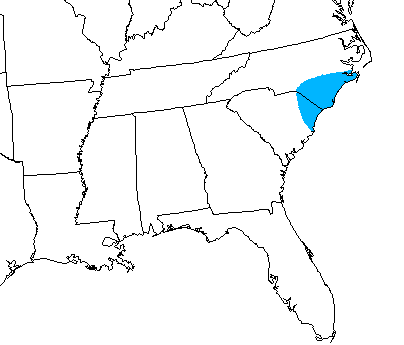
Venus flytraps are native to a small part of southeastern North Carolina and northeastern South Carolina. Their familiar appearance in shops around the world can hide how geographically restricted they are in nature. Cultivated plants elsewhere do not make those places part of the native range.
In the wild, they occupy wet, acidic, nutrient-poor ground in open pine savannas and related habitats. Periodic fire reduces competing vegetation and keeps sunlight reaching these low-growing plants. Fire suppression allows shrubs and trees to crowd them out; drainage and development can change the wet ground they depend on.
Why catch insects?
A flytrap still makes its own sugars through photosynthesis. Prey supplies additional mineral nutrients, including nitrogen and phosphorus. Sunlight remains essential: an insect meal cannot replace good light.

How does a Venus flytrap catch insects?
Each trap consists of two leaf lobes joined by a hinge. Small sensory hairs stand on the inner surfaces; the longer bristles along the edges are a different structure. Repeated stimulation of the sensory hairs in quick succession triggers closure. Further stimulation by struggling prey helps initiate tight sealing and digestion.
Sense movement
Touching a trigger hair generates an electrical signal. The plant responds to a sequence of signals, reducing unnecessary reactions to isolated disturbances.
Close the lobes
The lobes snap together and the marginal bristles interlock. They help retain prey, although capture is not guaranteed and some animals escape.
Seal & absorb
With continued stimulation, the trap closes more tightly and digestive secretions break down soft tissues. It later reopens, often leaving the prey’s hard outer remains.


Venus flytrap flowers, seeds & winter dormancy
Flytraps are flowering plants. White, five-petaled blooms rise on a stalk well above the rosette, followed by capsules containing small black seeds. Plants also multiply vegetatively from their short underground rhizomes.
Their flower visitors and their prey are largely different groups. Research in native populations found bees and beetles among important pollinators, while traps caught a broader assortment of invertebrates. The distance between elevated flowers and ground-level traps may help reduce this conflict, but it is not an absolute safeguard.
Outdoor plants follow the seasons. Growth slows as days shorten and temperatures cool, and older leaves may darken as the plant enters winter rest. Spring brings renewed growth. A smaller winter rosette should be interpreted in the context of the season and the health of the growing point.

Venus flytrap types & cultivars
Green traps, red leaves, long bristles, or short triangular teeth can all belong to the same species. Growers have selected distinctive cultivated forms. A cultivar name describes a selected plant, rather than a separate wild species.
Typical forms
The familiar green rosette with long marginal bristles. Trap interiors can develop reddish color; appearance varies with the plant and its growing conditions.
Red selections
‘Akai Ryu’, often called Red Dragon, is a well-known red cultivar. Red coloration does not make a plant a different species or change its basic trap mechanism.
Dentate forms
Short, triangular marginal teeth give dentate plants a striking outline. These edge bristles should not be confused with the tiny trigger hairs inside the trap.
A note on names: Named clonal cultivars are kept true through vegetative propagation. Seedlings can differ from their parents, so a seed-grown plant does not automatically inherit its parent’s cultivar name.
A plant that inspired Darwin
Long before close-up photography, botanical artists documented the flytrap’s unusual leaves and flowers. This historical plate shows the whole plant, making the contrast between the low traps and the tall flowering stalk especially clear.
Charles Darwin investigated its responses to touch and prey in his 1875 book Insectivorous Plants. Modern research continues that curiosity, exploring electrical signaling, prey retention, digestion, and the relationship between pollination and carnivory.
Try comparing the colored plate with the trap drawing above. One records the plant’s overall habit; the other isolates the structures that make a single leaf work.


Venus flytrap care basics
These growing basics explain how its habitat translates to cultivation. For step-by-step instructions, visit our carnivorous plant care guides.
Plenty of light
Outdoor sun or strong supplemental lighting supports healthy growth. A dim windowsill is usually insufficient. Acclimate a plant gradually when increasing its light.
Pure water
Use distilled, reverse-osmosis, or clean rainwater. Keep the growing medium moist. Ordinary filters often leave dissolved minerals behind.
A lean growing medium
Use suitable carnivorous-plant media without added fertilizer. Ordinary enriched potting soil is a poor match for roots adapted to nutrient-poor ground.
Venus flytrap questions answered
What do Venus flytraps eat, and should I feed every trap?
They catch insects and other small invertebrates. You do not need to feed every trap. Outdoor plants often catch prey themselves. Indoor feeding can support growth, but lighting and water come first. Use appropriately small insect-based food, rather than meat or kitchen scraps, and follow our care instructions.
Why is my Venus flytrap turning black?
Individual older traps naturally turn black as their leaves age. A trap may close after stimulation, and individual leaves eventually age. Look at new growth and the plant’s overall condition. Avoid repeatedly triggering traps for entertainment.
Can Venus flytraps grow indoors without a terrarium?
Yes, with strong supplemental light and suitable growing conditions. A sealed glass container is not necessary. Flytraps can grow outdoors or under suitable indoor lighting with the right water and medium.
Protect the wild plants
Habitat loss, altered water conditions, fire suppression, and poaching threaten wild populations. Choose nursery-propagated plants and leave wild plants where they grow. Conservation depends on protecting and managing their habitat, even when cultivated flytraps are easy to find.
Ready to grow one?
Bring the curiosity home with practical instructions for light, water, feeding, and seasonal care.
Sources & further reading
Published by House of Carnivores, our family plant nursery in Arlington, Virginia. Explore the Plant Wiki to compare flytraps with sundews and other carnivorous plants.
This field guide draws on botanical references, conservation information, and research. Image credits and reuse licenses appear alongside each visual.
- Kew Science · Dionaea muscipula — taxonomy, native range, plant structures, and trapping.
- U.S. Fish & Wildlife Service · Venus flytrap — habitat, reproduction, and conservation.
- International Carnivorous Plant Society · Growing Dionaea muscipula — cultivation and propagation.
- NC State Extension · Venus flytrap — plant identification and growing conditions.
- Youngsteadt and colleagues (2018) · Venus Flytrap Rarely Traps Its Pollinators — pollinator and prey separation.
- Davis and colleagues · Testing Darwin’s hypothesis about marginal spikes — experimental research on prey retention.
- Carnivorous Plant Database · Dionaea cultivar records — cultivar naming and descriptions.