
Growing Journal · · House of Carnivores
Notes from our nursery in Arlington, Virginia
It’s November in Northern Virginia, but our outdoor Venus flytraps and North American pitcher plants (Sarracenia) are still making the most of the unusually warm, sunny days! Many remain green and are continuing to produce new traps and pitchers.
Winter dormancy is approaching, though. Here’s how we’re preparing our nursery plants for their winter rest—and how you can help yours through the colder months.
These winter dormancy tips apply to Venus flytraps and North American pitcher plants (Sarracenia), not tropical carnivorous plants such as Nepenthes or most commonly sold tropical sundews.
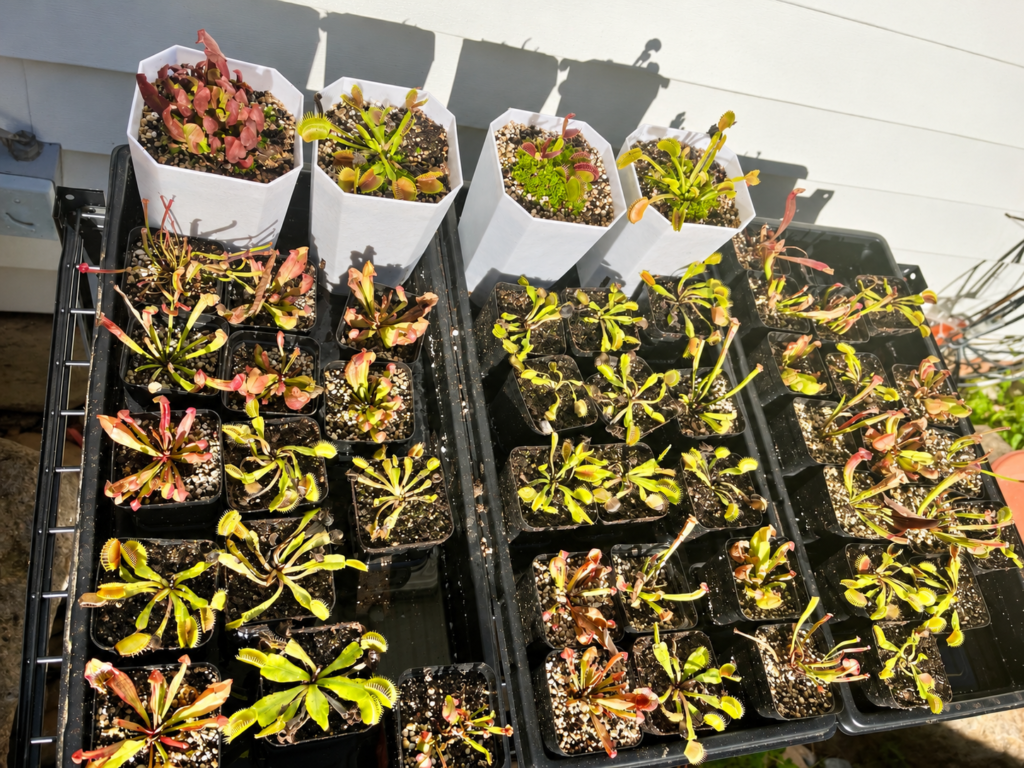
Winter care at a glance
- Light: Keep plants in their sunny outdoor location through the first light frosts, then provide cool, sheltered winter conditions as needed.
- Temperature: Aim for approximately 35–50°F in winter shelter; protect small pots from prolonged hard freezes.
- Water: Use distilled, rain, or reverse-osmosis water. Keep the growing medium damp, not waterlogged.
- Cleanup: Trim fully dead traps and pitchers with clean scissors; leave healthy green foliage intact.
- Spring: Gradually return sheltered plants outdoors as temperatures warm and new growth resumes.
Green leaves do not mean winter is cancelled
Shortening days and falling temperatures signal the seasonal change. Growth gradually slows; older traps and pitchers may brown, and flytraps may produce smaller leaves closer to the soil. Some healthy foliage can stay green through winter. A dormant plant does not have to become a bare pot.
Keep healthy, outdoor-acclimated Venus flytraps and Sarracenia in their usual sunny location through the first light frosts, provided more severe cold is not forecast. They can tolerate light frost, and those seasonal changes help them adjust. The first light frost is a useful seasonal cue, not a strict deadline for moving every plant into shelter. Watch the forecast: small, exposed pots are more vulnerable to prolonged freezing.
Choose a cool, sheltered winter spot
For small nursery pots, a practical sheltered target is roughly 35–50°F. An unheated garage, shed, or greenhouse is suitable only if its actual temperatures provide appropriate protection. Check with a thermometer: these spaces can become too warm during sunny periods or too cold during severe freezes.
Some natural light is helpful when plants retain green leaves, which can still photosynthesize. A cool spot near a window is useful. Avoid a warm living room or a dark cupboard as the routine winter home for these outdoor-grown plants. Keep some air moving around the pots rather than sealing damp plants in a stagnant enclosure.
Cold tolerance varies with species, acclimation, pot size, and exposure. Small pots have less insulation than an established bog planting. Move them into shelter before prolonged hard freezes, and protect them from drying winds and repeated freezing and thawing. One light frost is different from several days of frozen growing medium.
Water less often, but never let the pots dry out
Continue using distilled, clean rain, or reverse-osmosis water. Keep the growing medium damp throughout winter, without leaving the pots in deep standing water. Cooler, slower-growing plants usually use less water than they do in summer.
Damp means the medium stays moist to the touch; waterlogged means it remains saturated with excess water that cannot drain away. Check the medium regularly rather than watering by the calendar. Sheltered pots miss the rain and can dry out even in cold weather. Empty excess tray water when needed and avoid letting the crowns sit submerged.
Trim fully dead foliage and keep healthy green leaves
With clean scissors, remove fully blackened flytrap leaves and completely dead, brown pitcher foliage. Clear loose dead material from around the crowns to reduce places where mold can develop. Work carefully around new growth, and leave healthy green leaves and green portions of pitchers in place.
Seasonal browning is expected; it is not a reason to cut everything back. Check sheltered plants for mold and persistent sogginess as well as dryness.
What to expect in spring
As days lengthen and temperatures rise, watch for fresh traps and pitchers emerging from the growing points. Timing varies with the weather and the plant. Gradually return sheltered plants to outdoor sun, protect tender new growth during late cold snaps, and increase watering as active growth resumes.
For everyday growing advice, see our Venus Flytrap Care Guide and North American Pitcher Plant Care Guide. Our Plant Wiki also introduces Venus flytraps and Sarracenia.
Can Venus Flytraps Grow Indoors Year-Round Without Dormancy?
One question we hear frequently from customers is: ‘Can I keep my Venus flytrap indoors all year?’
We understand the appeal! Many people would love to enjoy these fascinating plants as indoor ‘pet plants’ without having to move them into winter storage.
Research has examined flytrap growth while conventional dormancy was prevented, but its scope matters. A 2014 study of flytrap seedlings focused on prey and growth, keeping plants above 18°C to prevent dormancy during a four-month experiment. This shows that seedlings can grow under those conditions; it was not a test of established plants skipping winter rest over many years.
The International Carnivorous Plant Society’s cultivation guide reports established flytraps grown indoors for over ten years under a consistent light period, with strong artificial light and regular feeding. This is valuable grower experience, rather than a controlled long-term comparison. It does not prove that skipping dormancy is equally reliable for every mature plant or home setup.
Successful year-round indoor growing requires sufficiently strong artificial light and attentive care, including appropriate water and regular feeding. Long-term results across different plants and growing conditions are not fully established by the research reviewed here. For outdoor-grown flytraps and Sarracenia, our usual recommendation remains a cool winter rest.
Here at House of Carnivores, some of our Venus flytraps have already been growing indoors under grow lights this year. We’re continuing to grow them indoors through winter as part of a multi-year experiment, comparing their performance with our outdoor-grown plants that receive normal winter dormancy.
Indoor growing requires more attention than our usual sunny outdoor setup, particularly when it comes to lighting, watering, and ongoing plant condition. We’re exploring this approach because many of our customers would love to keep a Venus flytrap indoors as a year-round ‘pet plant.’
We’ll share what we learn as the experiment continues!
These are observations in progress, not a proven cultivation method. Our flytrap experiment does not establish a year-round indoor method for Sarracenia.
Growing and learning together
Every growing season teaches us something new! We’ll continue sharing what we observe here at House of Carnivores, from seasonal plant care to our indoor-growing experiments.
If you have questions about caring for a plant you brought home from us, we’d love to hear from you!
Explore our Plant Wiki to learn more about carnivorous plants, or Contact Us with your questions.