North American pitcher plants
Sarracenia: sculptural traps rooted in sunny wetlands.
North American pitcher plants form hollow, fluid-holding leaves that catch insects and absorb mineral nutrients from their prey. Their pitchers rise from a rhizome, ranging from tall trumpets to the low, open cups of purple pitcher plants. This wiki covers Sarracenia, the North American pitcher plants shown as number 02 on our world map.


Where do North American pitcher plants grow?
Sarracenia grows in North American wetlands, with its greatest diversity in the southeastern United States. Sunny bogs, wet savannas and seepage slopes provide moisture and low-nutrient ground. The genus reaches much farther north through the range of S. purpurea.
Map entry 02
The blue region on our Plant Wiki world map highlights selected native ranges of North American pitcher plants represented in our collection. Distributions vary by species; the illustration does not show every population.
Different from tropical pitcher plants
Tropical pitcher plants (Nepenthes, map entry 03) hang their traps from leaf tendrils. They evolved pitcher-shaped traps independently and do not share Sarracenia’s cold winter dormancy. Other pitcher-plant lineages include Darlingtonia, Heliamphora and Cephalotus; a pitcher-shaped leaf does not mean plants are close relatives.


How do Sarracenia pitchers catch insects?
Pitchers combine visual cues, nectar and specialized surfaces. Visitors that lose their footing fall into the chamber. Slippery surfaces and, in some species, downward-directed structures make escape difficult. Digestive secretions and organisms living inside the pitcher release nutrients from prey, with the balance differing among species.
Attract
Color, nectar and other cues bring small animals to the opening.
Retain
The chamber and its surfaces keep many visitors from climbing out.
Absorb
The leaf absorbs nutrients released by the breakdown of prey. Light still powers photosynthesis.
The hood does not snap shut
A pitcher is a modified leaf, not a flower. Its hood and rim guide visitors and influence the trap’s environment; capture does not work like a Venus flytrap.
Sarracenia species, hybrids & flowers
The genus offers upright trumpets, white windows, red veins, curved hoods and compact purple pitchers. Plants grow from rhizomes, and established clumps may be divided.
Their nodding flowers have an unusual umbrella-like style beneath the petals. Flowers and pitchers are separate structures.
A hybrid combines parent species. A cultivar is a selected cultivated plant with a name; the terms are not interchangeable. Growers select plants for appearance, vigor and suitability to cultivation.
Pitchers can also be miniature ecosystems. Microbes and small animals may inhabit them, so the presence of life inside a trap is not necessarily a failure of carnivory.
North American pitcher plants in botanical history
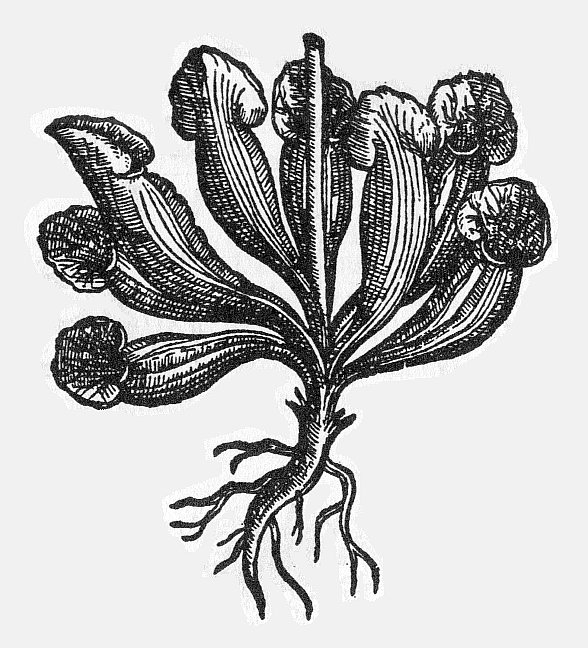
Long before their biology was understood, the extraordinary leaves of pitcher plants attracted botanical attention. This 1601 illustration records the distinctive shape of Sarracenia purpurea.
Historical drawings help us look carefully at form, but they do not show the full diversity of a genus or replace modern range and cultivation information.

North American pitcher plant care basics & questions
Sun & seasons
These plants suit sunny outdoor bog containers where the climate permits. Winter rest is part of their annual growth cycle; hardiness depends on species, climate and container exposure.
Wet, low-nutrient roots
Use an appropriate unfertilized acidic medium and low-mineral water such as rainwater, distilled water or reverse-osmosis water.
Protect wild habitats
Choose propagated plants. Wetland drainage, habitat loss and collecting pressure can threaten wild populations. Never harvest plants to start a collection.
Why are older pitchers turning brown?
Pitchers have a finite lifespan, and gradual loss of old traps can be normal, especially with seasonal changes. Sudden widespread decline calls for a check of roots, water, temperature and light.
Do North American pitcher plants need winter dormancy?
Yes. A winter rest is part of Sarracenia’s annual cycle. The right protection depends on the plant, your local conditions and its pot. See our care guide for practical seasonal instructions.
Can I use the same care as for Nepenthes?
No. Sarracenia needs a temperate seasonal cycle and wet bog-style conditions. Tropical Nepenthes needs frost-free conditions and moist, airy roots with drainage.
Do pitcher plants need to be fed meat?
No. Avoid meat and food scraps. Good light and suitable growing conditions are the foundation of growth; captured prey provides additional nutrients.
Sources & further reading
- North American Sarracenia Conservancy: cultivation
- Royal Horticultural Society: growing carnivorous plants
- U.S. Botanic Garden: cultivating carnivorous plants
Plant Wiki by House of Carnivores. Updated October 2026. Photographs and illustrations show representative plants; they are not product photographs.